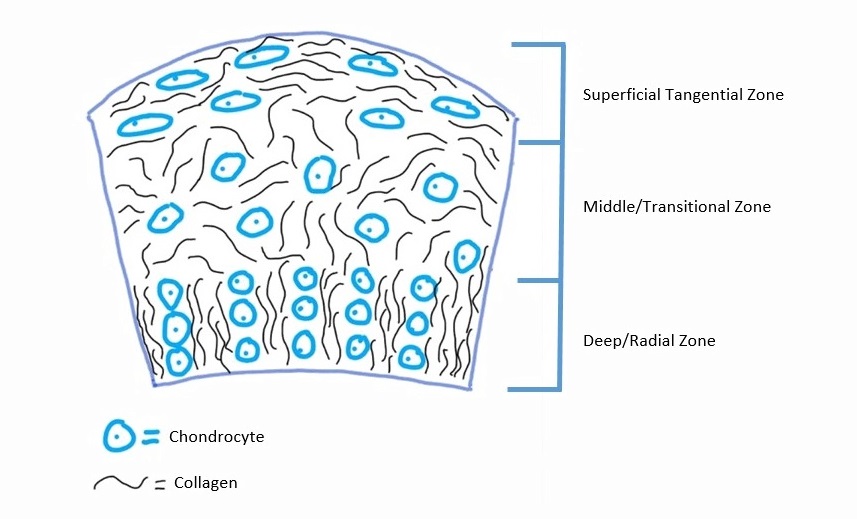
Often overlooked until an injury strikes, cartilage is one of the unsung heroes of the human body. This remarkable tissue plays a pivotal role in everything from allowing smooth, pain-free movement in our joints to giving shape to our nose and ears. Far more than just a filler, cartilage is a specialized, resilient connective tissue that provides vital support, flexibility, and cushioning throughout our anatomy.
Unlike bone, cartilage isn't rigid, but it's significantly stiffer than muscle or tendon, striking a perfect balance between strength and elasticity. Understanding its composition, diverse types, and unique biological properties is key to appreciating its crucial contributions to our overall health and mobility.
What is Cartilage? The Body's Flexible Framework
At its core, cartilage is a resilient and smooth type of connective tissue, designed for durability and function under various mechanical stresses. Visually, it's often semi-transparent and non-porous, presenting a distinctive appearance. For much of its extent, particularly in the limbs, it's encased by a tough, fibrous membrane known as the perichondrium, which offers protection and aids in its maintenance.
The fundamental building blocks of cartilage are specialized cells called chondrocytes. These cells are responsible for producing and maintaining the extensive extracellular matrix that defines cartilage. This matrix is a complex network composed primarily of:
- Collagen Fibers: Providing tensile strength and structural integrity.
- Proteoglycans: Large molecules that attract and retain water, giving cartilage its gel-like consistency and resistance to compression.
- Glycosaminoglycans (GAGs): Essential components of proteoglycans, further contributing to the tissue's hydration and shock-absorbing qualities.
- Elastin Fibers: Present in varying amounts, imparting elasticity and allowing the tissue to return to its original shape after deformation.
This unique composition allows cartilage to be firm yet flexible, distinguishing it from both the hard rigidity of bone and the more pliable nature of muscles. While in tetrapods (like humans), it's a significant but proportioned component of the skeleton, in other taxa such as sharks (chondrichthyans) and lampreys (cyclostomes), cartilage forms a much greater, if not the entirety, of their skeletal structure. This highlights its evolutionary importance and functional versatility.
The Multifaceted Functions of Cartilage
The roles of cartilage in the body are incredibly diverse and essential for daily functioning. Its unique properties allow it to perform several critical functions:
- Joint Protection and Smooth Movement: Perhaps its most recognized role is as articular cartilage, covering the ends of long bones at joints. Here, it creates a remarkably low-friction surface, enabling bones to glide smoothly over each other without grinding. This cushioning effect absorbs mechanical stress during movement, protecting the underlying bone from damage and wear. Without healthy articular cartilage, joint movement would be painful and severely limited, as seen in conditions like osteoarthritis.
- Structural Support: Cartilage is a key structural component in numerous body parts that require both firmness and flexibility. It gives shape to the external ear and the tip of the nose, prevents the collapse of the trachea (windpipe) and bronchial tubes with its reinforcing rings, and helps form the larynx (voice box) and the rib cage. This structural integrity ensures that these organs maintain their form and function while allowing for necessary movement and deformation.
- Shock Absorption: In high-impact areas, cartilage acts as a vital shock absorber. The intervertebral discs between the vertebrae in our spine, for example, are made of a strong type of cartilage, protecting the spinal cord and absorbing forces encountered during walking, running, and jumping. Similarly, the menisci in the knee provide crucial cushioning and stability.
- Maintaining Open Passageways: Because of its inherent rigidity, specific cartilaginous structures are designed to hold open critical tubes within the body. The cartilaginous rings of the trachea, such as the cricoid cartilage and carina, prevent the airway from collapsing, ensuring unobstructed breathing. Similar structures support the bronchial tubes, allowing air to reach the lungs effectively.
- Template for Bone Development: During embryonic development and childhood, much of our skeleton initially forms as cartilage before being gradually replaced by bone in a process called endochondral ossification. Cartilage also persists in growth plates (epiphyseal plates) of long bones, which are crucial for determining bone length and height during development.
The Three Main Types of Cartilage: Tailored for Specific Roles
Not all cartilage is created equal. To fulfill its diverse functions, nature has developed three distinct types of cartilage, each with a specific composition and mechanical properties. These types differ primarily in the relative amounts and types of collagen fibers, elastin, and proteoglycans within their extracellular matrix. For a more detailed exploration of each type, including their microscopic appearance and specific locations, you can refer to our article: Hyaline, Elastic & Fibrocartilage: Understanding Each Type.
- Hyaline Cartilage:
- Characteristics: This is the most prevalent type of cartilage in the body, known for its smooth, glassy, and translucent appearance. Its matrix contains fine type II collagen fibers, giving it a homogeneous look. It has a moderate number of chondrocytes embedded in its matrix.
- Locations: Found at the articular surfaces of long bones (e.g., knee, hip), in the nose, rib cage (costal cartilages), trachea, parts of the larynx, and smaller respiratory tubes. It also forms the temporary skeleton in the fetus.
- Functions: Provides low-friction surfaces for joint movement, offers structural support with some flexibility, and resists compressive forces.
- Elastic Cartilage:
- Characteristics: Distinguished by the presence of abundant elastic fibers within its matrix, in addition to type II collagen. This gives it exceptional flexibility and resilience, allowing it to bend and then return to its original shape. Chondrocytes are typically more densely packed here than in hyaline cartilage.
- Locations: Found in structures that require significant flexibility and the ability to regain shape, such as the external ear (pinna), the epiglottis (which prevents food from entering the windpipe), and parts of the larynx (e.g., corniculate and cuneiform cartilages), as well as the auditory (Eustachian) tubes.
- Functions: Provides flexible support, maintains the shape of organs while allowing for repeated bending and stretching.
- Fibrocartilage:
- Characteristics: This is the strongest and most rigid type of cartilage, built for resistance to heavy loads and tensile forces. Its matrix is densely packed with thick bundles of type I collagen fibers arranged in parallel, with fewer chondrocytes compared to hyaline or elastic cartilage, leading to more intercellular space. It often appears more fibrous and less uniform.
- Locations: Found in areas subjected to high mechanical stress and shock absorption, including the intervertebral discs of the spine, the menisci of the knee, the pubic symphysis, and where tendons insert into bone. It can also be found in the temporomandibular joint (TMJ).
- Functions: Provides excellent shock absorption, resists compression, and offers strong tensile strength, making it ideal for support in high-stress environments.
The Unique Biology of Cartilage: Nutrition, Repair, and Vulnerability
One of the most defining and consequential characteristics of cartilage is its unique biological makeup, particularly its lack of direct blood supply and nerves.
Avascular and Aneural Nature: Cartilage is an avascular tissue, meaning it contains no blood vessels. This distinguishes it from most other connective tissues that rely on a direct blood supply for nutrient delivery and waste removal. Consequently, it is also largely aneural, meaning it lacks nerve innervation, which explains why cartilage damage often doesn't cause pain until other innervated tissues (like bone or surrounding membranes) become involved.
Nutrition by Diffusion: Without blood vessels, chondrocytes receive their essential nutrients and oxygen, and remove waste products, through a process of diffusion. This occurs from surrounding tissues, primarily the synovial fluid in joints (for articular cartilage) or from blood vessels within the perichondrium (for cartilage covered by this membrane). Interestingly, mechanical forces play a crucial role in this process. The compression and decompression of articular cartilage during movement, or the flexion and extension of elastic cartilage, generate fluid flow within the matrix. This "pumping action" actively assists in the diffusion of nutrients to the chondrocytes, highlighting the importance of movement for cartilage health. To learn more about this fascinating process, delve into our article: Avascular Cartilage: How It Gets Nutrients & Repairs Itself.
Slow Turnover and Limited Repair: The avascular nature also has significant implications for cartilage's ability to heal. Compared to other connective tissues, cartilage has an exceptionally slow turnover rate of its extracellular matrix. More critically, its capacity for self-repair is notoriously limited. Once damaged, especially in the case of articular cartilage, it tends to repair at a very slow rate, if at all. This often results in the formation of fibrocartilage scar tissue, which, while providing some structural integrity, lacks the smooth, resilient properties of the original hyaline cartilage, contributing to chronic joint issues.
Practical Insight: This limited repair capacity underscores the importance of protecting our cartilage. Maintaining a healthy weight, engaging in balanced exercise that strengthens surrounding muscles without excessive impact, and consuming a nutrient-rich diet can all contribute to preserving cartilage integrity. Recognizing the early signs of joint discomfort and seeking professional advice can also be crucial, as intervention before extensive cartilage damage can make a significant difference.
In conclusion, cartilage is a truly remarkable and versatile tissue, integral to our body's structure, movement, and protection. From the smooth glide of our joints facilitated by hyaline cartilage, to the flexible support of our ears provided by elastic cartilage, and the robust shock absorption of our spine thanks to fibrocartilage, this specialized connective tissue performs a myriad of essential functions. Its unique avascular nature, while allowing for low-friction movement, also presents significant challenges for nutrition and repair, making its preservation a key aspect of lifelong health and mobility. Appreciating the complexity and vital roles of cartilage allows us to better understand and care for our bodies, ensuring that this unsung hero continues to support us through every step and turn of life.