Cartilage is one of the unsung heroes of the human body, a remarkable biological material that plays a pivotal role in our structure, movement, and overall physical function. More than just a filler, this resilient and smooth connective tissue is crucial for everything from cushioning our joints to maintaining the shape of our nose and ears. While often overshadowed by bones and muscles, understanding the intricate world of cartilage, particularly its three main types—hyaline, elastic, and fibrocartilage—reveals its sophisticated design and indispensable contributions.
At its core, cartilage is a specialized form of connective tissue, unique in its properties. Unlike bone, it lacks the same rigidity, offering a balance of stiffness and flexibility. It's considerably stiffer and less pliable than muscle or tendon, making it perfectly suited for tasks requiring both support and give. Semi-transparent and typically non-porous, cartilage usually comes enveloped by a tough, fibrous membrane called the perichondrium, which helps in its protection and nutrition, though not all cartilage types boast this covering.
The Fundamental Nature of Cartilage
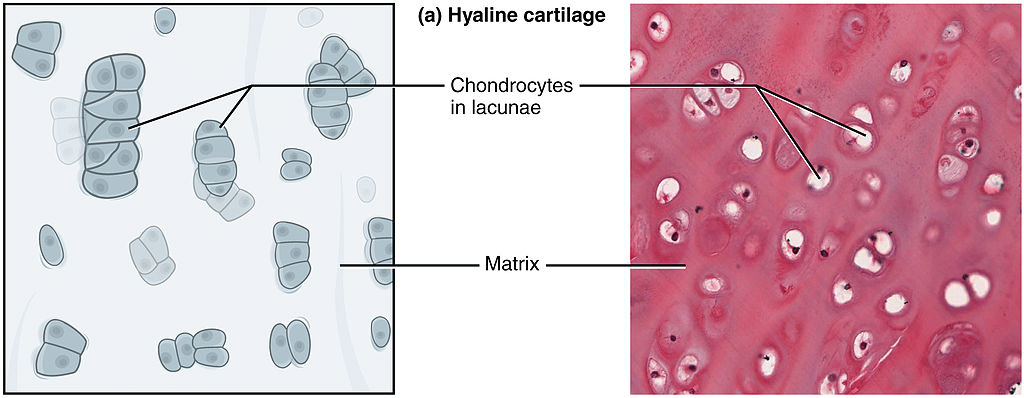
To truly appreciate the different types of cartilage, it's essential to first grasp the foundational elements that define this unique tissue. Cartilage is primarily composed of specialized cells known as chondrocytes. These remarkable cells are responsible for producing and maintaining the extensive extracellular matrix (ECM) that surrounds them. This matrix is a complex blend of water, collagen fibers, proteoglycans (large molecules that attract and hold water), glycosaminoglycans (chains of sugar molecules), and in some types, elastin fibers.
One of the most defining and challenging characteristics of cartilage is its avascular nature—meaning it contains no blood vessels. It also lacks nerves, which makes it insensitive to pain. This absence of direct blood supply has profound implications for its nutrition and repair. Chondrocytes receive their nutrients not through direct blood flow, but via diffusion from surrounding tissues, such as the synovial fluid in joints or from the perichondrium. This process is often aided by mechanical forces: the compression of articular cartilage or the flexion of elastic cartilage generates fluid flow, which helps "pump" nutrients to the chondrocytes. This indirect nutritional pathway contributes to cartilage's notoriously slow turnover of its extracellular matrix and its very limited capacity for self-repair compared to most other tissues in the body.
Why is Cartilage So Crucial?
Despite its slow healing, cartilage performs an array of vital functions, making it indispensable for maintaining bodily integrity and enabling movement:
- Joint Cushioning and Smooth Movement: As articular cartilage, it covers the ends of long bones at joints, providing a remarkably smooth, low-friction surface that allows bones to glide effortlessly against each other. It also acts as a shock absorber, distributing mechanical stress across the joint.
- Structural Support: Cartilage is a key structural component in many body parts that require both support and flexibility. This includes the rib cage, nose, ears, and parts of the larynx.
- Maintaining Open Passageways: Its inherent rigidity allows cartilage to hold open critical tubes within the body. Examples include the rings of the trachea (windpipe), like the cricoid cartilage, which prevents collapse and ensures clear airflow to the lungs.
- Developmental Role: In the embryonic stage, much of the skeleton begins as cartilage, which is later replaced by bone. Cartilage also plays a crucial role in the growth of long bones in children.
For a deeper dive into these varied roles, you might find our article Cartilage Explained: Function, Types, and Body Support particularly insightful.
A Deep Dive into Cartilage Types: Hyaline, Elastic, and Fibrocartilage
While all cartilage shares fundamental characteristics, nature has engineered three distinct types, each with a unique matrix composition and mechanical properties tailored for specific anatomical needs and functions. The primary differentiators lie in the relative amounts and types of collagen fibers, proteoglycans, and the presence of elastin.
Hyaline Cartilage: The Body's Smooth Operator
Hyaline cartilage is the most prevalent type of cartilage in the human body, characterized by its glossy, somewhat translucent (hyaline means "glass-like") appearance. Its extracellular matrix is remarkably homogeneous, packed with fine, delicate Type II collagen fibers that are generally not visible under a light microscope. This provides a balance of strength and flexibility, making it perfect for smooth, articulating surfaces.
- Composition: Fewer chondrocytes compared to elastic cartilage, resulting in more intercellular space. Its matrix is rich in proteoglycans and Type II collagen.
- Function: Provides smooth, low-friction surfaces for joint movement, structural support, and some flexibility. It effectively resists compressive forces.
- Location: Found extensively throughout the body, including the articular surfaces of long bones (e.g., knee, hip, shoulder), in the nose, the trachea, parts of the larynx, the bronchi, and the anterior ends of the ribs (costal cartilages). It also forms the temporary skeleton in embryos.
Its primary role in enabling smooth joint motion is critical for pain-free movement, highlighting its everyday importance.
Elastic Cartilage: Flexibility and Form
As its name suggests, elastic cartilage is distinguished by its extraordinary flexibility and ability to return to its original shape after deformation. This unique property is due to the abundance of elastic fibers woven throughout its matrix, alongside Type II collagen.
- Composition: Chondrocytes in elastic cartilage are typically closer together than in hyaline cartilage, resulting in less intercellular space. The dominant feature of its matrix is the dense network of elastin fibers, which give it its characteristic yellowish appearance and elasticity.
- Function: Provides flexible support that can withstand repeated bending and maintain the shape of structures. It's like the body's natural spring, allowing movement without permanent distortion.
- Location: Primarily found in areas requiring both structural support and significant flexibility, such as the external ear (pinna), the epiglottis (which covers the trachea during swallowing), parts of the larynx (like the cricoid and carina cartilages, which allow the voice box to move during speech), and the auditory (Eustachian) tubes.
The resilience of elastic cartilage is crucial for sensory organs and vital airways, ensuring they can bend and recover without losing function.
Fibrocartilage: Strength Under Pressure
Fibrocartilage stands apart as the toughest and most resilient of the three types, designed to withstand immense mechanical stress, including significant compressive forces and tensile strength. Its matrix is densely packed with visible bundles of robust Type I collagen fibers, organized parallel to stress lines.
- Composition: Fibrocartilage has the fewest chondrocytes among the three types, leading to the most intercellular space. The dominant feature is the thick, irregular bundles of Type I collagen fibers, which often appear wavy. Unlike hyaline and elastic cartilage, it lacks a perichondrium.
- Function: Provides exceptional tensile strength and superior shock absorption. It acts as a robust cushion and forms strong connections between bones.
- Location: Found in areas subjected to high stress and weight-bearing, such as the intervertebral discs of the spine (which absorb shock between vertebrae), the menisci of the knee (critical for stabilizing the joint and distributing load), the pubic symphysis (connecting the left and right pubic bones), and certain tendons and ligaments where they insert into bone. Notably, some fibrocartilage, like the meniscus, has a partial blood supply, offering a slight advantage in nutrient delivery and potentially some repair capacity compared to other cartilage types.
The incredible strength of fibrocartilage is essential for supporting the spine and major joints, absorbing impacts from everyday movements and strenuous activities.
Maintaining Your Cartilage Health: Practical Insights
Given cartilage's limited capacity for self-repair, proactive care is paramount. Once damaged, cartilage degradation can lead to significant pain and mobility issues, as seen in conditions like osteoarthritis.
Tips for Cartilage Care:
- Balanced Nutrition: A diet rich in antioxidants, vitamins, and minerals supports overall tissue health. Vitamin C is vital for collagen synthesis, a key component of cartilage. While direct supplementation of glucosamine and chondroitin remains a topic of debate for cartilage repair, a varied diet provides the building blocks for healthy tissues. Omega-3 fatty acids can help reduce inflammation that may contribute to cartilage degradation.
- Regular, Low-Impact Exercise: Activities like swimming, cycling, and walking promote healthy joint fluid circulation, which aids in nutrient diffusion to chondrocytes without putting excessive stress on the cartilage. Avoid high-impact activities that cause joint pain, as this could signal cartilage distress.
- Maintain a Healthy Weight: Excess body weight significantly increases the load on weight-bearing joints (like knees and hips), accelerating the wear and tear of articular cartilage.
- Proper Posture and Ergonomics: Especially for the spine, maintaining good posture reduces undue stress on intervertebral discs (fibrocartilage), preventing premature degeneration.
- Listen to Your Body: Pay attention to persistent joint pain, stiffness, or swelling. These could be early warning signs of cartilage damage or inflammation, warranting medical attention.
Understanding the unique requirements and challenges of cartilage empowers us to make lifestyle choices that support its longevity and function throughout our lives.
Conclusion
Cartilage, in its various forms—hyaline, elastic, and fibrocartilage—is a truly remarkable tissue, embodying a perfect blend of resilience, flexibility, and strength where needed most. From providing the smooth, low-friction surfaces in our joints to giving shape to our ears and nose, and absorbing the shocks of daily life in our spine, its contributions to our structural integrity and mobility are profound. While its avascular nature presents challenges for healing and regeneration, appreciating its intricate design and implementing proactive care strategies can help maintain the health and function of this vital connective tissue, allowing us to move through life with greater ease and comfort.